What Is B2B Marketing Segmentation? A Complete Guide for 2026
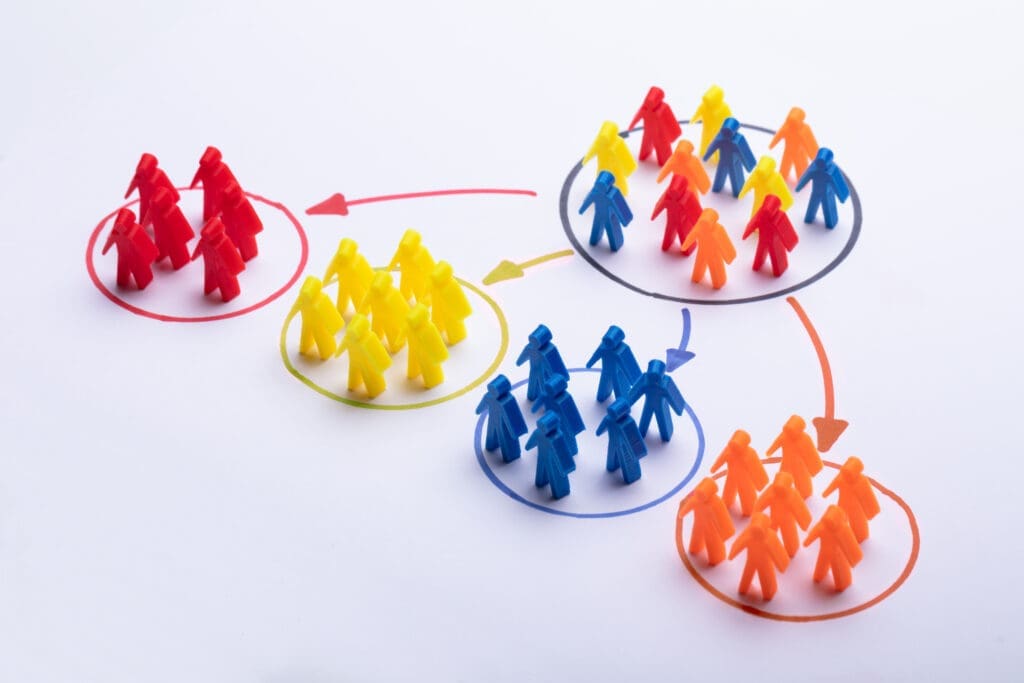
Whatever marketing sphere you’re working in, segmentation is a key tool for making the most of your time, budget, and overall campaign. It’s the process of taking a large and varied market and dividing it into small, clearly defined segments that let you personalize your messaging more specifically to their wants, interests, and needs. It’s about making it easier to deliver the right marketing to the right people to increase interest and conversions.
What Is B2B Marketing Segmentation?
At the core of it, B2B market segmentation has the same overall goal as it does in the B2C market: categorizing potential clients in order to speak more directly to those people.
In B2B, you’re looking at what’s called the total addressable market (TAM) – which means all customers, clients, or accounts that could find value or benefits from your product or services. From there, you want to narrow the list based on your ideal customer profile and then segment them out based on one of several different ways.
The Types of B2B Marketing Segmentation
There are several different ways a business can segment audience data by:
- Firmographic – Similar to demographics in B2C marketing, firmographics is about categorizing your customers based on characteristics like the type of industry they’re in, the size of the company, their annual revenue, and what stage of growth they’re at (i.e., emerging vs. established).
- Geographic – As it says on the tin, this would be about segmenting customers based on where they’re located, but it can get more complex than just simply noting their state or district or country. You can also factor in things like local regulations that may impact them or whether they’re situated in a more urban or rural area.
- Behavioral – This approach segments based on how customers behave and interact with brands and businesses. This includes things like previous purchases, usage patterns for different products, engagement rates and responses to brand marketing, etc.
- Needs – With this perspective, you’re segmenting current and prospective clients based on what they need. By stepping back and looking at what their pain points are and what their goals and objectives are, you can better understand how you can support them and categorize accordingly.
- Technographic – Because so much of our marketing and economic landscape these days is digital, there is a growing trend of segmenting clients by technology use. This requires looking at things like what software and digital tools they’re using, what their IT infrastructure looks like, how forward-thinking they are in terms of digital adoption, and what their cybersecurity needs might be.
- Decision-Making – A key component of the B2B market is knowing who is involved in making decisions for each of your customers and clients. Is it an internal team? A committee? A varied group of stakeholders? Your approach will likely vary depending on whether you just need the sign-off of the CFO versus the full buy-in of a trustee board.
How Is B2B Marketing Segmentation Different from B2C?
There are some key ways that segmenting audiences in the B2B space differs from the B2C market. Let’s break a few of them down:
Multiple Decision Makers
In B2C, you’re talking to individual customers to convince them to sign on to your products. In B2B, like we mentioned above, there are many different decision makers that you have to win over, from C-suite executives to entire teams.
Longer, Multi-Step Buying Process
An individual customer will have a pretty straightforward funnel from first contact to purchase to brand loyalty, but B2B has a lot more moving parts to the cycle. You have to account for the back and forth between different decision makers and understand that, while a person may buy what they want, a business is looking to buy what it needs.
More Complex Products and Services
Because you’re B2B and often dealing with the more complicated goals and obstacles that come with an entire company, what you offer is often more complex as well. Clients and customers may need more time to understand what you can do for them, and your team has to be skilled at communicating your unique selling points.
Relationships Matter
The longer buying cycles and more complicated product offerings mean that building real relationships between your business and theirs is vital. Companies want to feel like they can trust the businesses they’re working with; they want to connect with a partner, not just indulge in a one-off purchase.
How Does B2B Segmentation Affect Your Marketing Campaign?
What benefits can you see from your marketing efforts as a result of B2B segmentation:
- Efficiency – Market segmentation lets you tailor your strategies and focus on the audiences that offer the most potential.
- Conversions – Targeted, segmented campaigns are likely to result in higher conversion rates because you are speaking to their specific aspects and needs.
- Resource Management – By utilizing market segmentation, you can better allocate the resources you have available, whether that is your budget or the time and effort of your employees.
- Engagement and Retention – Today’s clients and customers are looking for personalization, and segmentation allows you to better craft your messaging to attract their attention and keep them engaged.
How to Go About Segmenting Your B2B Audience?
Having discussed all of the above, what matters next is the process: specifying effective ways of going about B2B market segmentation. And like many of our how-tos on other digital marketing tactics, we recommend some upfront work to lay the foundation for a successful campaign.
Stakeholders and ICPs
Before you start segmenting your market, you need to clearly define who you want to be talking to in the first place. Getting input from internal teams and stakeholders can supply unique insights that will let you better outline your Ideal Customer Profile (ICP). And that ICP will then inform how you go about segmentation.
Segmentation
Now is where you take your market and break it into targeted pieces. You want to get as granular as possible because the more you niche down, the better you can speak to those specific customers. This may take some trial and error. Stay flexible and don’t be afraid to use multiple methods of segmentation so you can get a more complete picture of your audience.
Note: You don’t necessarily have to go on a whole new data-gathering spree to start this process. You may already have the information you need, so stop and review what kinds of data you have at your disposal.
Evaluation and Selection
Once you’ve got your market segmentations outlined, you need to narrow your focus. It likely isn’t the best use of your time or money to try to reach out to all of them at once. Instead, you need to drill down to which segments you want to prioritize based on which ones align best with your business and show the most promise.
Customization
Okay, you’ve got your segments and you’ve prioritized them. Now you need to create messaging that speaks to your top targets. Don’t rush this process. Take the time to make it personalized and tailored based on what you’ve learned of them during the segmentation process.
Analysis, Testing, and Adjustments
As with most things in digital marketing, it’s not a set-it-and-forget-it situation. You’ll want to regularly take a look at how your messaging is performing with these different segments, analyze if there is room for improvement, and test different options.
B2B Segmentation for Success
If you haven’t been all-in with B2B market segmentation before now, 2026 is the year to kick it into high gear, either internally or by partnering with a digital marketing agency like EdwardsSchoen who can help guide you through the process. It’s one of the best ways to make the most of your time, resources, and budget and see high returns as a result.