
Summer gets all the credit for grilling … it shouldn’t!
Summer is when people grill because it’s 87 degrees, there’s a baseball game on, and somebody bought a 48-pack of hot dogs at Costco.
Fall is when grilling becomes a personality trait.
The air gets crisp. The leaves start doing their annual impression of a Home Depot parking lot. Football is on TV. Hoodies become acceptable again. And suddenly, the grill isn’t just an appliance sitting six feet from the back door … it’s the center of civilization.
Across America, the food landing on grills changes dramatically depending on where you live. New England has its seafood. The Mid-Atlantic has its barbecue traditions and sausages. The Southeast takes pork personally. Texas would like to remind everyone that barbecue is not a food group but a constitutional right. California puts vegetables on the grill and somehow makes them fashionable.
And then there’s the rest of the world — where people have been grilling things over fire for thousands of years while Americans are still trying to decide whether pellet grills count as “real.”
So, as October settles in and the great American grill season enters its final glorious chapter, let’s take a regional tour of the foods most likely to meet fire, smoke, cast iron and somebody’s suspiciously expensive instant-read thermometer.
Northeast: From New York to Maine, Fall Means Seafood, Sausage and Anything That Can Survive a Nor’easter
In the Northeast, grilling is less about pretending you’re on vacation and more about acknowledging that winter is coming.
Yes, the calendar says October — your neighbor says there’s still time for one more cookout. Your spouse says it’s too cold — your neighbor fires up the grill anyway.
New England’s proximity to the Atlantic makes seafood an obvious star. Lobster, shrimp, scallops and salmon all perform beautifully over a hot grill, especially when paired with lemon, butter and the sort of confidence that comes from knowing you paid approximately $47 for dinner.
Further inland, sausages, burgers and chicken remain dependable fall staples. New York brings its own grilled-meat sensibilities, while upstate communities embrace the smoky, hearty foods that make sense when temperatures begin dropping.
And yes, corn still gets grilled. Because apparently Americans have collectively agreed that corn tastes better when we make it unnecessarily difficult to eat.
Fall favorites
- Grilled lobster and lobster tails
- Salmon with lemon and herbs
- Grilled shrimp and scallops
- Italian sausage and peppers
- Burgers and steak
- Grilled corn
- Applewood-smoked chicken and pork
EdwardsSchoen Lump Charcoal Index: 73.4% of Northeast grills are fired up in October specifically because someone said, “We need to use up this charcoal before winter.”
“The proper New England grilling temperature is somewhere between ‘pleasantly warm’ and ‘why are we doing this outside?’”
Frankie DeLuca, Northeast Grilling Correspondent, The American Backyard Review
Mid-Atlantic: Maryland Crab, Pennsylvania Sausage and Virginia’s Deep Relationship With Pork
The Mid-Atlantic is where regional food identities start getting serious. Maryland has crab. Pennsylvania has sausage. Virginia has pork. Everyone has an opinion about how the other guy is doing it wrong.
Maryland’s crab culture naturally spills onto the grill, whether it’s grilled crab cakes, crab-stuffed dishes or seafood prepared alongside the traditional summer-to-fall cookout lineup. The Chesapeake influence is impossible to miss.
Pennsylvania brings the sausage game … especially kielbasa, Polish sausage, bratwurst and other smoked meats that practically beg for a grill grate and a pile of peppers and onions.
Virginia’s barbecue traditions push pork toward center stage. Pulled pork, pork chops and ribs all make sense as October foods because they’re hearty without requiring you to surrender the entire afternoon to a smoker.
And fall is exactly when that distinction matters. Summer grilling can be casual. October grilling starts feeling like an event.
Fall favorites
- Maryland-style crab cakes
- Grilled shrimp and Chesapeake seafood
- Kielbasa and smoked sausage
- Sausage with peppers and onions
- Pork ribs
- Pulled pork
- Grilled pork chops
- Apple-glazed chicken
Mid-Atlantic Grill Gatekeeping Ratio: For every 10 people at a backyard barbecue, 14 believe they know the correct way to season the meat.

“If three people from Pennsylvania agree on how to grill sausage, you should immediately check the calendar because something supernatural is happening.”
Marlene Whitaker, Chair of the Mid-Atlantic Backyard Culinary Council
Want to stay up to date with the news and resources from EdwardsSchoen?
Sign up for our monthly newsletter to stay in the know!
Southeast: Where Pork Isn’t Just Dinner. It’s a Cultural Institution.
From North Carolina through South Carolina and Georgia and into Alabama, the Southeast doesn’t simply grill … it has a philosophy … and somewhere in that philosophy is pork.
- North Carolina’s barbecue traditions alone could fill an encyclopedia, a doctoral dissertation and approximately 900 arguments at a family reunion. Pulled pork, ribs and smoked shoulders dominate, with regional preferences for sauces ranging from vinegar-heavy preparations to sweeter, tomato-based styles.
- South Carolina brings its mustard-forward traditions.
- Georgia adds its own barbecue culture.
- Alabama has smoked meats, chicken and the famous white barbecue sauce associated with northern Alabama.
Fall is particularly good for Southern grilling because the weather finally cooperates. You’re no longer sweating directly into the potato salad … which everyone agrees is a meaningful culinary achievement.
Fall favorites
October also brings something else … football … and in the South, football and barbecue have been legally married in spirit for generations.
- Carolina pulled pork
- Pork shoulder
- Baby back and spare ribs
- Grilled chicken
- Alabama-style smoked chicken
- Sausage
- Grilled vegetables
- Smoked turkey
Southern Smoke Ring Productivity Index: One properly smoked pork shoulder generates enough leftovers to feed 8.7 people, 11 sandwiches and one uncle who keeps “just picking at it.”

“A Southern barbecue argument is not an argument. It is an oral tradition passed down through generations.”
Billy Ray Thornton, Emeritus Professor of Backyard Meat Sciences
Florida: Where the Grill Refuses to Acknowledge That It’s Fall
Florida has a problem with fall … it doesn’t recognize it as legitamate.
The rest of America gets changing leaves, cool evenings and sweaters. Florida gets 88 degrees, humidity and a Publix parking lot that feels like the surface of the sun.
So while October means pumpkin spice everywhere else, Florida’s grill remains firmly in summer mode.
Seafood dominates for obvious reasons. Mahi-mahi, grouper, snapper, shrimp and other Gulf and Atlantic favorites are natural candidates for the grill. Citrus-based marinades (particularly lime) bring the Florida flavor profile to life.
But Floridians also embrace burgers, chicken, steak and all the other American grilling classics. The difference is that the Florida grill season doesn’t really end … it just becomes slightly less hostile.
Fall favorites
- Grilled mahi-mahi
- Grouper
- Snapper
- Shrimp
- Citrus-marinated chicken
- Steak
- Burgers
- Grilled vegetables
Florida Fall Detection Rate: 4.2%. Scientists have confirmed that Floridians can identify autumn only when Publix moves pumpkin beer next to the seasonal cookies.

“Fall in Florida is when you put on a long-sleeve shirt at 7:12 a.m., immediately regret it, and then grill grouper in shorts.”
Chip Weatherford, Florida Seasonal Grill Historian
Want to stay up to date with the news and resources from EdwardsSchoen?
Sign up for our monthly newsletter to stay in the know!
Mid-South: Beef, Pork, Smoke and the Texas Question Nobody Asked
The Mid-South is where the grill starts getting philosophical.
Arkansas, Louisiana, Tennessee, Mississippi and portions of SW Missouri, Oklahoma and Texas bring an enormous range of barbecue traditions to the table. Pork is huge. Beef is huge. Sausage is huge.
Basically, if it once had a pulse, there’s a reasonable chance somebody in this region has figured out how to smoke it.
- Texas, naturally, brings brisket to the conversation. Beef brisket is slow-smoked until the meat becomes tender enough to justify spending half a day staring at a fire.
- Louisiana brings Cajun and Creole influences, with smoked sausage, andouille and seafood making frequent appearances.
- Tennessee brings its own celebrated barbecue traditions, particularly ribs and pulled pork.
- Oklahoma and Arkansas bridge several barbecue traditions, while Mississippi brings Southern barbecue firmly into the mix.
October is perfect for all of it. The temperature drops just enough that standing next to a smoker for six hours becomes less of a survival exercise and more of a hobby.
Fall favorites
- Texas-style brisket
- Beef ribs
- Pulled pork
- Memphis-style ribs
- Andouille sausage
- Smoked sausage
- Grilled chicken
- Cajun-seasoned shrimp
- Smoked turkey
Brisket Time Conversion Formula: Every hour spent smoking brisket equals approximately 14 minutes of actual cooking and 46 minutes of standing around telling people how long the brisket has been smoking.
“The brisket is done when it’s done. The person asking when it’s done is not.”
Raymond “Big Ray” Hollis, Texas Barbecue Philosophy Department
Midwest: The Land of Brats, Burgers and the Annual Battle Against the Wind
Missouri, Kansas and Iowa bring a distinctly Midwestern approach to fall grilling: practical, hearty and fully prepared to continue cooking outside despite weather conditions that suggest otherwise.
- Kansas City is obviously a major barbecue influence, with ribs, brisket, pulled pork and burnt ends commanding serious attention.
- Iowa brings pork to the table in a big way, including pork chops that are practically engineered for an autumn cookout.
- Missouri sits in the valley of barbecue tradition: Kansas City, St. Louis, Springfield, and nearby Memphis and Tulsa influences … but Kansas City-style barbecue has become one of America’s most recognizable regional food identities. Burnt ends, anyone?
And then there are brats. Bratwurst is basically the Midwestern answer to the question, “What should we eat while watching football outside when it’s 49 degrees?”
The answer is apparently sausage.
Fall favorites
- Kansas City-style ribs
- Burnt ends
- Bratwurst
- Grilled pork chops
- Burgers
- Steak
- Smoked chicken
- Grilled corn
- Sausage and peppers
Midwestern Grill Wind Resistance Score: 81%. The remaining 19% represents the percentage of charcoal that has blown into a neighbor’s yard since 1987.

“The Midwest doesn’t stop grilling because it gets cold. It simply adds a jacket and questions your commitment.”
Doug “Dutch” Haverkamp, Grilling Weather Services
Want to stay up to date with the news and resources from EdwardsSchoen?
Sign up for our monthly newsletter to stay in the know!
Mountain West: Steak, Game, Vegetables and the Great Altitude Adjustment
Colorado, Wyoming, Utah and Idaho bring something different to the fall grill: altitude, wide-open spaces and a strong argument for eating something substantial after spending four hours pretending a hike was recreational.
Beef is a natural centerpiece. Steak, burgers and beef ribs all work beautifully in cooler weather. The region also has a strong connection to game meats, including elk, pheasant, quail, pronghorn and other wild game. These leaner meats require a little more attention on the grill, but they fit the mountain-West personality perfectly.
Idaho brings potatoes into the conversation, because apparently even the humble potato deserves a grilled comeback.
And vegetables shouldn’t be overlooked. Fall produce such as squash, onions, peppers and corn can turn a steak dinner into something that looks like you planned the meal rather than simply placing meat over fire.
Fall favorites
- Ribeye and other grilled steaks
- Elk and game meats
- Burgers
- Beef ribs
- Grilled potatoes
- Corn
- Squash
- Peppers and onions
- Smoked trout
Rocky Mountain Grill Altitude Index: At elevations above 7,000 feet, every grill master spends 13% more time staring at the grill while insisting nothing is cooking differently.

“At altitude, even your steak needs a little personal space.”
Clay Morrison, Director of Rocky Mountain Grilling Operations
Southwest: Heat, Smoke and the Argument for Putting Chile on Everything
Arizona, Nevada and New Mexico bring a completely different personality to the grill. Here, smoke meets chile, citrus, cumin and the unmistakable influence of Southwestern and Mexican culinary traditions.
Carne asada is an obvious favorite, particularly when sliced for tacos, burritos or simply consumed directly from the cutting board while everyone else waits for dinner.
New Mexico’s chile culture also finds a natural home over open flame. Roasted green chile brings smoky depth to burgers, steaks, chicken and pretty much anything else that can physically accommodate it.
Arizona brings grilled meats and Sonoran influences. Nevada borrows liberally from the culinary traditions of the broader Southwest, while its enormous restaurant culture adds its own interpretations.
October is particularly pleasant in this region because summer’s furnace finally begins turning itself down.
Fall favorites
- Carne asada
- Grilled steak
- Chicken fajitas
- Shrimp
- Green chile burgers
- Grilled peppers
- Street-style corn
- Grilled tacos
Southwestern Chile Utilization Rate: 94.8% of all grilled meals are improved by chile, according to absolutely nobody who has conducted an actual study.
“There are two levels of chile heat: ‘That’s good’ and ‘Who authorized this?’”
Miguel Alvarez, Southwestern Fire & Flavor Institute
Want to stay up to date with the news and resources from EdwardsSchoen?
Sign up for our monthly newsletter to stay in the know!
Pacific: California, Oregon and Washington Put Vegetables on the Grill and Somehow Make It Cool
The Pacific region has perhaps the most diverse grilling culture in America.
California brings tri-tip, steak, chicken, seafood and vegetables … lots of vegetables. Because California looked at the grill and said, “You know what this needs? Zucchini.“
And you know what? It works!
Oregon and Washington lean heavily into Pacific Northwest seafood, particularly salmon, along with shellfish and locally sourced produce. Wood-fired cooking and smoking also fit naturally into the region’s food culture.
The fall grill here can be remarkably sophisticated without becoming ridiculous. Salmon with cedar smoke. Grilled squash. Tri-tip. Mushrooms. Corn. Peppers.
And then somebody puts avocado on something … California remains California.
Fall favorites
- California tri-tip
- Grilled salmon
- Dungeness crab and other shellfish
- Steak
- Grilled mushrooms
- Squash and zucchini
- Corn
- Bell peppers
- Grilled avocado
Pacific Produce-to-Meat Ratio: 1.7 vegetables are purchased for every steak, although only 0.6 vegetables actually make it onto the grill.
“If you don’t grill at least one vegetable, California revokes your outdoor cooking permit.”
Heather McCallister, West Coast Grilling Sustainability Consultant
Global Grill Guide: The Rest of the Planet Has Been Doing This Longer Than We Have
Here’s the humbling part: Americans like to think we invented the backyard grill … we did not.
Humans have been putting food over fire since approximately forever, and cultures around the world have developed spectacular grilling traditions.
In Japan, yakitori turns skewered chicken into an art form. Different cuts are grilled over charcoal and seasoned with salt or tare sauce.
Across parts of Africa, grilled goat and other meats are staples, often cooked over open fires or charcoal with regional spice blends and marinades.
Argentina’s asado treats beef grilling as something closer to a cultural institution than a weekend activity. Brazil’s churrasco takes a similar approach, with skewered and grilled meats served in abundance.
Korean barbecue brings the grill directly to the dining table, where diners cook meat themselves. Turkish and Middle Eastern cuisines feature countless forms of kebabs and grilled meats.
Southeast Asia brings satay. India has tandoori cooking and numerous grilled or roasted preparations. Australia has its famous lamb and steak traditions.
The details change. The basic concept doesn’t. Fire + food + people = dinner.
Global fall grill favorites
- Japanese yakitori
- Korean barbecue
- Argentine asado
- Brazilian churrasco
- African grilled goat
- Turkish kebabs
- Middle Eastern kofta
- Southeast Asian satay
- Indian tandoori chicken
- Australian lamb chops
- Mediterranean grilled seafood
Global Charcoal Exchange Rate: One American backyard grillmaster believes he has invented “international fusion barbecue” every 11.3 seconds.

“Human civilization began with fire. Eventually, someone put a sausage on it. We have been refining the decision ever since.”
Dr. Henri Okafor, International Institute for Applied Grilling Studies
Why Fall Might Actually Be America’s Best Grilling Season
There is something uniquely satisfying about grilling in October. Summer grilling is expected. Fall grilling feels earned. The heat isn’t trying to kill you. You’re not sweating through your shirt while flipping burgers. You can actually stand beside the grill without questioning your life choices.
And the foods change.
Heavier cuts of meat become more appealing. Smoke becomes a feature rather than an inconvenience. Root vegetables, squash and potatoes suddenly make sense. Seafood remains fantastic. Sausages become borderline mandatory.
Most importantly, fall grilling brings people together at precisely the moment when everyone starts migrating indoors.
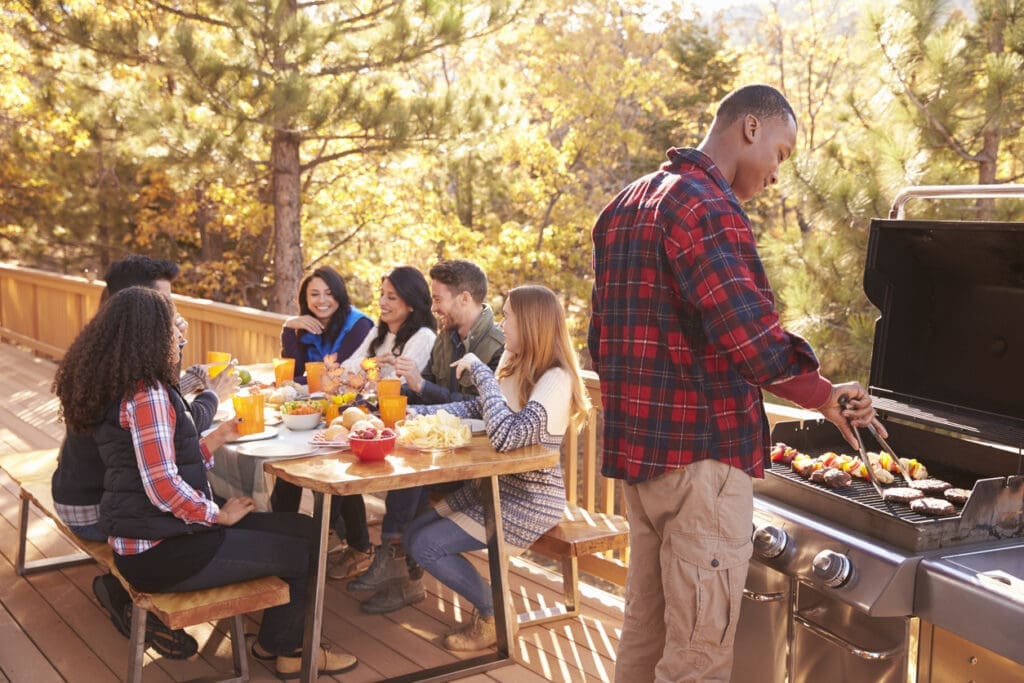
That’s the magic — a grill doesn’t care whether you’re serving brisket in Texas, salmon in Washington, crab cakes in Maryland, pork in North Carolina, bratwurst in Iowa or yakitori in Tokyo. It asks only one question:
Are you hungry?
The answer, of course, is yes.
The Final Grill: America, One Fire at a Time
From Maine to Florida, California to Texas, and across oceans to Japan, Africa, Argentina and beyond, grilling remains one of the world’s great culinary equalizers.
The techniques differ. The sauces differ. The meats differ. Some people use charcoal. Some use gas. Some use pellets. Some insist that anything other than hardwood burned down to glowing embers is an affront to civilization.
And every one of them is convinced they’re right. That’s part of the fun!
Because grilling isn’t really about having the fanciest equipment, the perfect rub or the most expensive cut of meat. It’s about gathering people around heat and turning raw ingredients into something worth sitting down together to eat.
So this October, before the grill gets covered, the patio furniture gets stored and somebody inevitably asks whether we’re “really going to keep grilling all winter,” fire it up.
- Throw on the steak.
- Smoke the pork.
- Grill the salmon.
- Char the vegetables.
- Make the sausage [well, cook it — you don’t have to make it unless you’re into it].
- Roast the chile.
- And if you’re feeling particularly ambitious, try something from the other side of the planet.
Just don’t tell the guy from Texas that your pellet grill makes better brisket. Nobody needs that kind of conflict at Thanksgiving.

